
|
Sam Eldin's AI Tailored Virtual Butler Project©
Architect-Design |
|---|
|
Sam Eldin's AI Tailored Virtual Butler Project Architect-Design Table of Contents: • Introduction • Aging Population Impact on Society, Government and Families • Our AI Tailored Virtual Butler Project • Our AI Tailored Virtual Butler Project Return on Investment • Actual Saving in Term of Dollars for Government, Families and Caregivers • How Our Project Reduce of Elderly's Support Cost? • Our Project AI Automation and Intelligence Roadmap • Using Templates Banks and Machine Learning to Build Project Requirement • Our Main Tools • Automating Project Requirement • Building Project Documentations • Using Machine Learning + AI Search Tools + Big Data Search Requirement • Big Data Values Tables • Big Data Long Integer Matrices • Real-World Implementation • Our Core Support • Quick View of Our System Analysis • System Analysis and Business Analysis Templates Bank • Business Analysis Templates • Butler Project Containers-Components Architect-Design • DataOps • Security • Machine Learning (ML) • BareMetal • Business Units • Services • Interfaces-Communication-Rules of Engagement • Big Data, Data Matrices and Long Integer Records • Butler Project Tiers and Containers • Butler Project Tiers-Containers-Components • Butler Project Tiers-Containers-Components Testing Twin Architect-Design Standard Research Disclaimer: Some of the definitions provided in our documents are based on internet research (including AI websites) conducted in Year 2026. While we strive to ensure the accuracy and reliability of the data, it is provided "as is" without warranties of any kind. This information is for general informational purposes only and should not be treated as professional advice. Users should independently verify any facts, figures, or conclusions before making decisions based on this research. Introduction: The global aging population is growing rapidly, with the U.S. population aged 65+ projected to reach 82 million by 2050. Alongside this growth comes a rise in cognitive decline, chronic health conditions, social isolation, scam victims and increasing caregiving shortages. Many older adults struggle not only with physical limitations, but with memory, decision-making, and maintaining independence in daily life. These challenges often lead to missed medications, unmanaged finances, reduced quality of life, and increased reliance on caregivers. 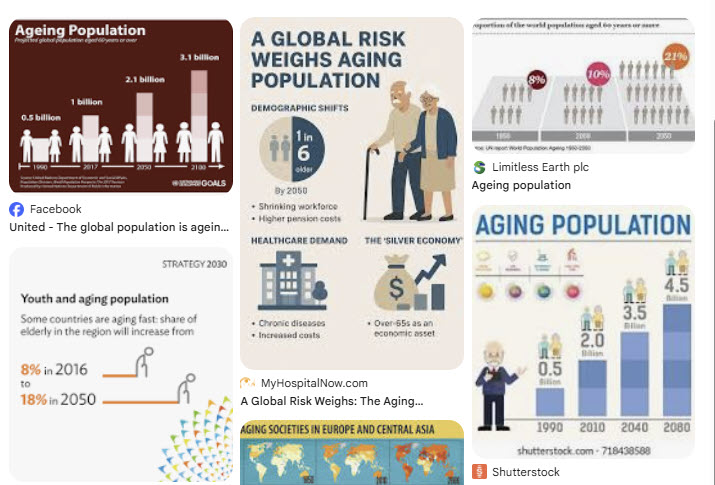
Aging Population's (Americans 65 and older) according to Google search The total cost of the aging population's (Americans 65 and older) health care and caregiving expenses is estimated to be $1.2 trillion in 2020, or roughly $22,356 per person. The Baby Boomers age 65 and older are expected to drive a $1 trillion-plus opportunity in consumer spending by 2030, with spending by those over 75 growing at double the national average. In 2026, the total population of adults aged 65 and older in the United States is approximately 62 to 66 million. This demographic accounts for nearly 18% to 19% of the nation's overall population, representing the largest sustained surge of aging Americans in U.S. history. Globally, there are approximately 850 to 860 million people aged 65 and older. This demographic accounts for roughly 10.5% of the total world population, reflecting a historic shift in human demographics due to increased life expectancy and declining fertility rates. These elderly are face chronic health conditions and cognitive decline such as: • Dementia • Alzheimer's disease • General age-related memory decline So, the problem is very real and the aging population is growing fast globally. Aging Population Impact on Society, Government and Families: 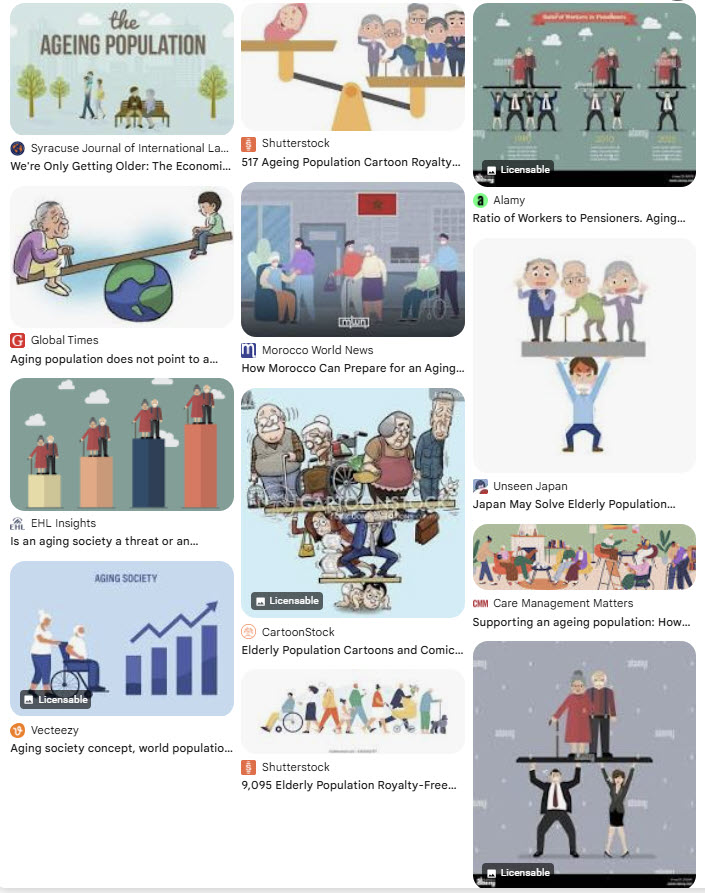
Aging Population Impact on Society, Government and Families An aging population, driven by longer life expectancies and lower birth rates, significantly strains society, governments, and families by increasing demand for healthcare and social support while reducing the working-age tax base. By 2030, in the U.S., those over 65 will outnumber those under 18, putting immense pressure on federal budgets, social security, and medical systems. Our AI Tailored Virtual Butler Project: Our AI Tailored Virtual Butler Project is one of the answers in helping the elderly with cognitive challenges. In short, our AI Tailored Virtual Butler would be helping elderly with every day task including elders' finances, physical security and physical training. Our AI Tailored Virtual Butler Project would be the AI-powered cognitive support system that acts as a real-time memory, decision assistant, and daily guide for older adults-while keeping caregivers in the loop. 
AI Virtual Personal Butler Our AI Tailored Virtual Butler Project Return on Investment: Our AI Tailored Virtual Butler Project would greatly reduce the impact on society, government and families. our AI Tailored Virtual Butler Project would help structure and support elders. It would reduce elder supports and dependencies which in turn, it would have a lot less impact on society, government, families and the elders themselves. Actual Saving in Term of Dollars for Government, Families and Caregivers: We need a single and clean total dollar figure, for the actual saving in term dollars for government, families and caregivers when elders use our AI Virtual Butler to help them with every day task including elders' finances, physical security and physical training. To get the actual single and clear total dollar figure we asked; • ChatGPT ChatGPT's Answer: Total savings at scale Now multiply by adoption. Example scenarios 1 million elders using the system • Low case: $15B/year • Mid case: $25B–$35B/year • High case: $55B/year ________________________________________ 5 million elders • Low: $75B/year • Mid: $125B–$175B/year • High: $275B/year ________________________________________ 10 million elders • Low: $150B/year • Mid: $250B - $350B/year • High: $550B/year ________________________________________ Reality-adjusted estimate (most credible) If you assume: • Mixed population (not all high-risk) • Imperfect adoption and usage • Moderate health impact ⭐ Best defensible national-scale estimate: • 5 - 10 million users --> $125B to $300B per year total savings ________________________________________ Key takeaway The number you're looking for, stated simply: ⭐ Total savings - $25K - $35K per elder per year ⭐ At scale: $100B+ annually once adoption reaches millions Google's Answer: ✅ Result The total estimated economic saving is $238,000 per elder, per year. For a population-wide implementation (1 million users), this represents a total economic impact of: $238,000,000,000 ($238 Billion). ________________________________________________________________________________ Total Savings if we do the math: ChatGPT - USA : 62 million • Low case: $15B/year * 62 = $930B/year • Mid case: $25B–$35B/year * 62 = $1,550B - $2,170B/year • High case: $55B/year * 62 = $3,410B/year ________________________________________ Google - USA : 62 million $238,000 per elder * 62 million = $14,756B/year The calculated totals are kind of high; we believe the total saving is over $400 Billion per year. How Does Our Project Reduce of Elderly's Support Cost? Our AI Tailored Virtual Butler Project would build a Virtual AI system which would replace many of the needed help-support and in turn reduces the cost of helping elders by governments, families and caregivers as follows:
Our Project AI Automation and Intelligence Roadmap: A Project AI Automation and Intelligence Roadmap is the sequence of processes of deployment of artificial intelligence to optimize, visualize, and automate complex workflows. It pairs AI automation with intelligence processes (Machine Learning, Bid Data and AI Search Tools) to automate the development of an AI system. Our AI Tailored Virtual Butler Project Roadmap Goal: Looking at Big Data and AI Project Requirement Image, the question would be: How to Develop Our AI Tailored Virtual Butler Project Roadmap Using Big Data and Project Requirement? 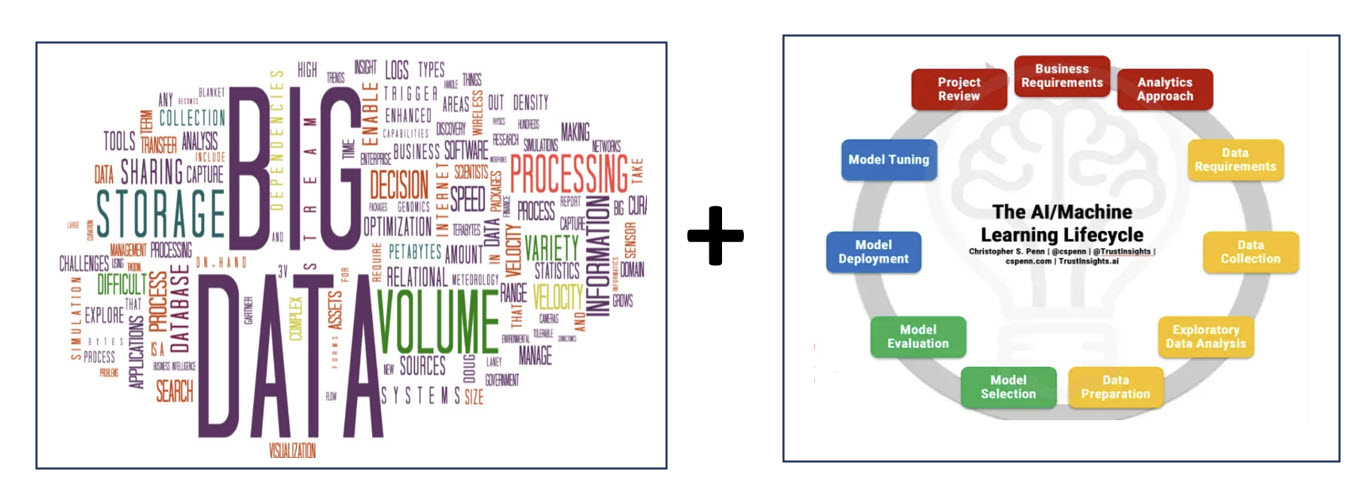
Big Data + AI Project Requirement Image Project requirements are important because they inform and guide the motivation and direction of our entire project. Project requirements dictate the specific methodology, timelines, and resources needed for success. Since no two projects are identical, customizing our approach is crucial to avoid misaligned goals, and wasted effort and time. Understanding the types of requirements and properly categorizing our project ensures a smooth execution. What Are Common Processes Among Different Project Requirements? Regardless of the industry or project type, all project requirements undergo a universal lifecycle. The common core processes are: 1. Initiation 2. Analysis 3. Documentation 4. Verification 5. Planning 6. Execution 7. Monitoring 8. Controlling 9. Change Management 10. Closure The Advantage of Using Templates in Project Requirement: Using project requirement templates ensures efficiency, consistency, and accuracy by eliminating the need to start from scratch. They standardize how information is captured, safeguard against overlooked details, and streamline communication among stakeholders. The Advantage of Using Templates Banks in Project Requirement: Using template banks for project requirements drastically accelerates project initiation and prevents scope creep. They provide standardized, structured formats that ensure no critical information is missed, saving time, reducing costly errors, and improving communication among all stakeholders. The Value of Big Data in Building Project Documentation: Big data transforms project documentations from static records into a dynamic, actionable asset. It replaces manual, error-prone paperwork with automated, real-time data capture-such as IoT sensors and Building Information Modeling (BIM). This shift improves decision-making, mitigates financial and legal risks, and enhances overall project efficiency. Our Machine Learning and Automating Project Requirement Building: Machine Learning (ML) significantly streamline project requirement building by automating documentation and predictive analytics. These tools analyze historical project data to draft specs, predict milestones, and suggest optimizations, ultimately reducing manual effort and preventing high costly processes. ML Engines can handle more details, more analysis options plus with faster speed than traditional documents development. Machine Learning Analysis of Big Data: Big Data is the storage, organization, and rapid processing of information, Machine Learning provides the intelligence layer. ML algorithms of learning from data and rather than following hard coded rules to uncover hidden patterns and make accurate predictions. AI Search Tools and Big Data: AI search tools act as the cognitive layer for Big Data, transforming vast, unstructured datasets into actionable intelligence. They perform the data mining, these systems use natural language processing (NLP), semantic retrieval, and machine learning to instantly synthesize information, making them essential for modern research, analytics, and business intelligence. Using Templates Banks and Machine Learning to Build Project Requirement: Using template banks and ML would automate requirement gathering by transforming raw ideas into structured Product Requirements Documents (PRDs) and user stories. This approach saves over 60% of project planning time. they would be using historical data to automate and generate score plus trace software or business specifications. 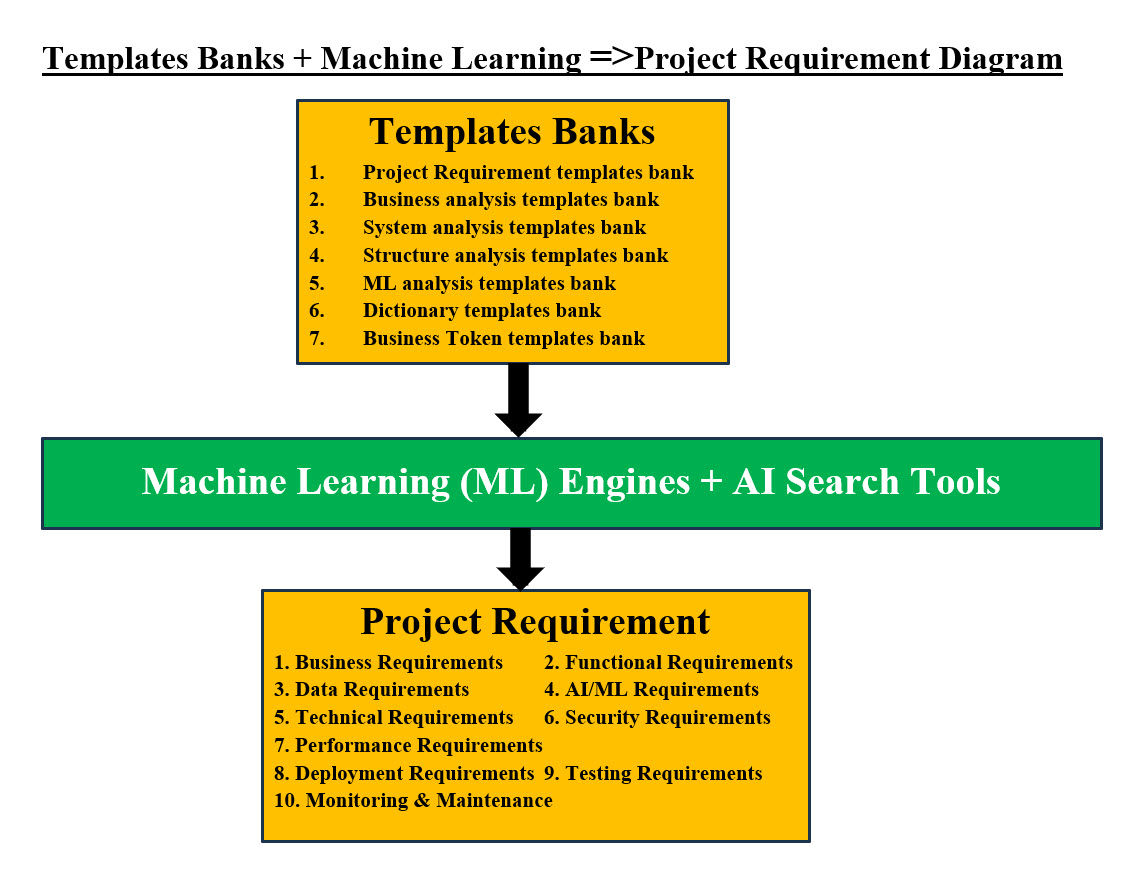
Template Banks to Project Requirement Image Template Banks to Project Requirement Image is a quick view and rough presentation of how would be using Templates Banks, Machine Learning and AI Search Tools to build project requirement. Our Main Tools: We are using our ML tools (engines) plus AI Search Tools to parse and convert Big Data into our manageable Data Matrices. Our ML engines are the core power in the Big Data parsing and conversions and AI Search Tools are supporting search tools. We do need to use AI Search Tools such ChatGPT or any AI Search Tools for value matching and errors correction. AI Search Tools: These AI Search Tools have very impressive text and graphic analysis which we are harnessing their power. Our main power when it comes to developing any AI system is our Machine Learning Engines and "not AI Search Tools." These AI Search Tools are very handy when it comes text and graphics. Therefore, we use These AI Search Tools when in comes to image analysis, voice-to-text messages or any text-image messages comparisons. Note: It is easier, convenient and cost effective to use these AI Search Tools instead of building them. Developing them would be costly effort which would require tremendous efforts, time and testing. Therefore, AI Search Tools is a fare better choice than developing these AI Search Tools. Our project goal is to build automation and intelligent system harnessing the power of AI and Machine Learning (ML). Consequently, we need to build the system's structure. Our structure must be AI-based, practical, modifiable, reusable, cloud-based and uses templates. We also use Development Banks. Therefore, we need to define a number of terms in the following sections. Templates: Templates provide a reusable framework that saves time, ensures brand consistency, and minimizes errors. They eliminate the need to start from scratch, allowing our focus purely on content while maintaining a polished, professional standard across all your work. System Development Templates Banks: System development banks (SDBs) and Multilateral Development Banks (MDBs) leverage pre-built templates to standardize operations. These templates accelerate digital transformation, ensure regulatory compliance, and enable institutions to scale sustainable infrastructure projects. Our Templates Banks: Our Templates Banks are our depositories of standard templates which are used by most known system. For example, we would be collecting every possible template used by top software vendors. We would be using AI system to parse and create the best practice templates which would reflect AI choice of the best templates. We would also create different template banks for different requirement and different systems usage. For example, there would be: 1. Project Requirement Templates Bank (addressing different projects) 2. Business Analysis Templates Bank (addressing different businesses) 3. System Analysis Templates Bank 4. Data Structure Analysis Templates Bank 5. Architect-Design Templates Bank 6. ML analysis templates bank 7. Dictionary Templates Bank 8. Business Token Templates Bank 9. Testing Processes Templates Bank The primary objectives of our bank templates are to streamline and boost AI development workflows and efficiency. They act as standardized frameworks to help reduce development risks, time, accelerate automate-development and handle complex data. Automating Project Requirement: Project requirements are the specific conditions, capabilities, and deliverables that must be met for a project to be considered a success. They define what needs to be achieved and why, serving as the foundation for budgeting, scheduling, and project scoping. Such requirement is needed for our Big Data Search Requirement. The following are the list of project requirement: 1. Business Requirements 2. Functional Requirements 3. Data Requirements 4. AI/ML Requirements 5. Technical Requirements 6. Security Requirements 7. Performance Requirements 8. Deployment Requirements 9. Testing Requirements 10. Monitoring & Maintenance Instead of starting from scratch, we would be using preexisting templates banks as listed in Our Templates Banks. Any Project Requirements Document would be properly done utilizing pre-built template banks. The requirement docs are streamlined by following a standard framework and leveraging established template libraries to fit any project's specific needs. 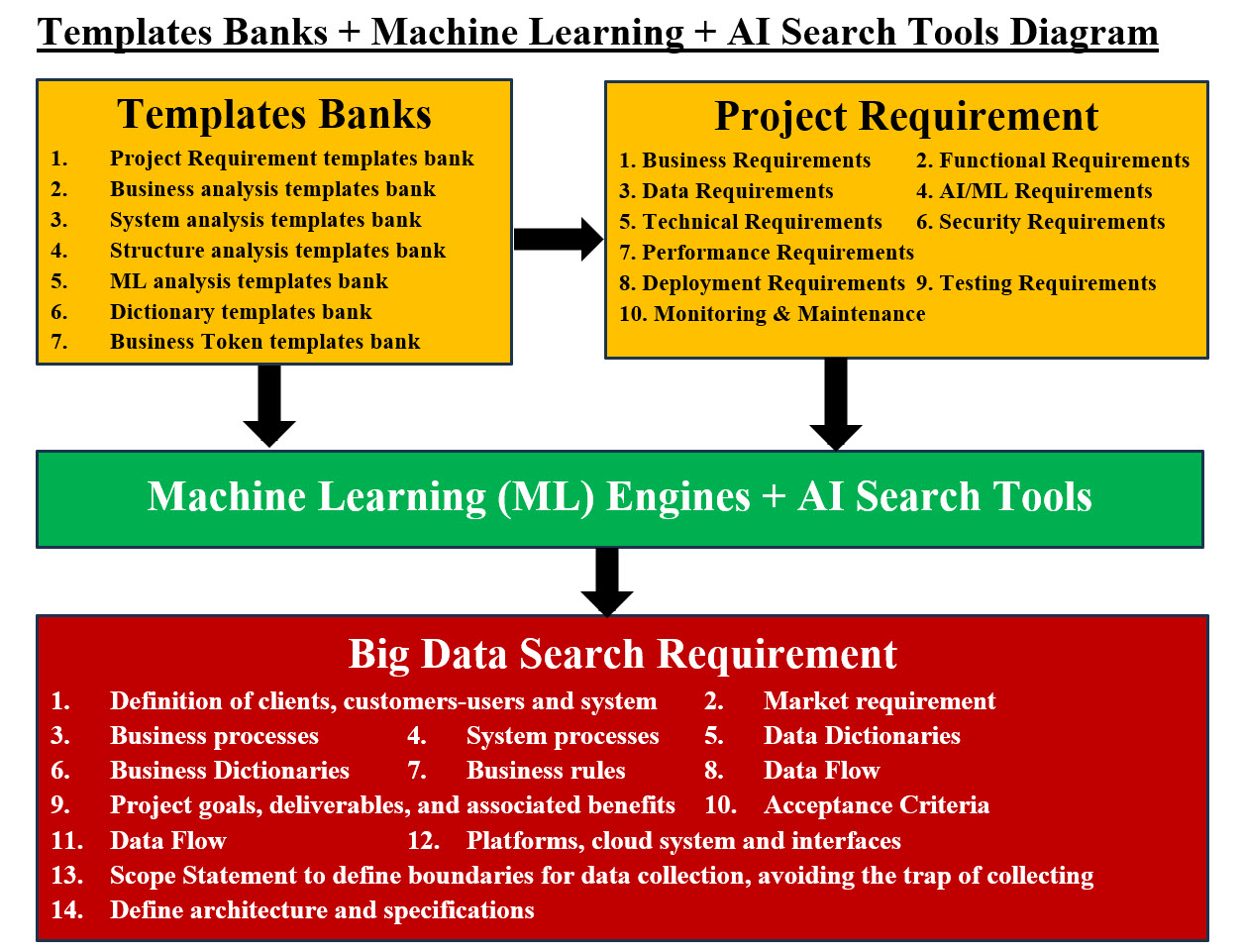
Templates Bank and Project Requirement Image Templates Bank and Project Requirement Image is a rough draft showing how can we use Templates Banks to automate the creation of project requirement documentations. The image is also showing how Machine Learning (ML) Engines and AI Search Tools would be used to create the Big Data Search Requirement. Our Big Data Search Requirement Categories: First, we need to have the basic-needed categories before any search would be done. These categories are project's business requirement, system requirement and structure requirement. Once we have these requirement components, then our ML plus AI search tools parse, processe and translate-converte requirement docs into the following Big Data search requirement categories: 1. Definition of clients, customers-users and system 2. Market requirement 3. Business processes 4. System processes 5. Data Dictionaries 6. Business Dictionaries 7. Business rules 8. Project goals, deliverables, and associated benefits 9. Acceptance Criteria 10. Process Flow 11. Data Flow 12. Platforms, cloud system and interfaces 13. Scope Statement to define boundaries for data collection, avoiding the trap of collecting 14. Define architecture and specifications Implementing the use of Big Data Search Requirement Categories: The best way of presenting how to use these Big Data Search Requirement is going through of the Big Data Search Requirement categories such as the Market Requirement for our project. Using our Templates Banks, we can use Market Requirement and fill in the blank with our AI Virtual Butler Project requitement: Building Project Documentations Using Machine Learning + AI Search Tools + Big Data Search Requirement Building project documentation (often called construction documents) refers to the comprehensive set of records, drawings, and specifications that define, communicate, and track every aspect of a construction project. It acts as a legally binding roadmap for contractors and ensures compliance with building codes and regulations. The following is the list of the most common project documentation: 1. User Documentation 2. Formal Design Documents 3. Field & Project Management Documentation 4. Product Requirements 5. Best practices for software documentation 6. Technical Architecture 7. API & Developer Docs 8. Technical documentation 9. Code documentation 10. Development documentation 11. Testing documentation 12. Project Management 13. Release notes 14. Listens Learned The Value of Big Data in Building Project Documentation: Big data transforms project documentations from static records into a dynamic, actionable asset. It replaces manual, error-prone paperwork with automated, real-time data capture-such as IoT sensors and Building Information Modeling (BIM). This shift improves decision-making, mitigates financial and legal risks, and enhances overall project efficiency. Big Data Search Requirement: A Big Data Search Requirement defines the specific criteria, performance metrics, and indexing capabilities required for a system to query massive, complex, and unstructured datasets. It ensures an organization can retrieve actionable, precise insights at petabyte-scale and beyond. 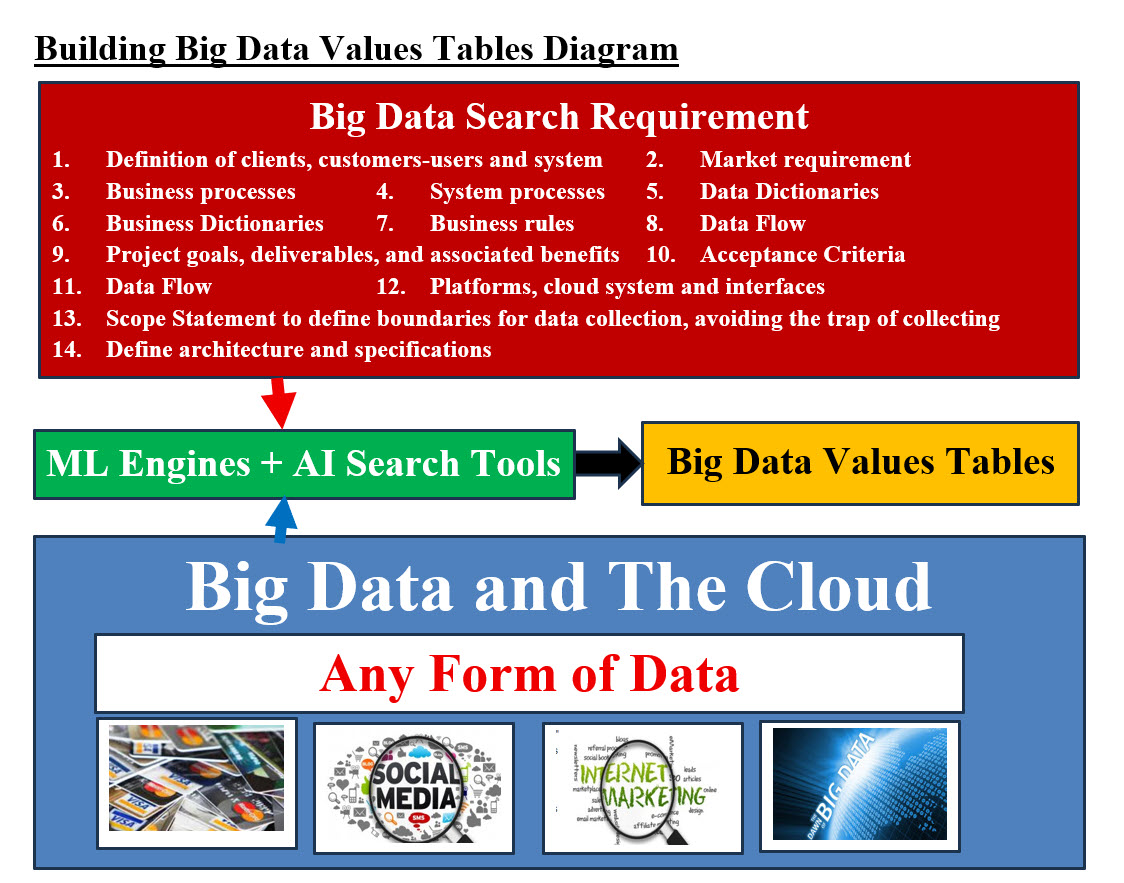
Building Big Data Values Tables Diagram Image Big Data Values Tables: What is Big Data Values Tables? 1. Our Big Data Values Tables would the short-hand version of Big Data values 2. They would eliminate redundancies, errors, bad values, or issues associated with Big Data processing When it comes to Big Data processing, our main goal is to access Big Data only one time (eliminate any revisit) and put our effort only in updating and keeping our Big Data Values Tables current and up to date. These Big Data Values Tables would be: 1. Matrices - 2-dimention tables 2. Reports 3. Files 4. Hach Tables 5. Linked Lists 6. Vectors 7. Any data structure for quick lookups Big Data Values Tables would store any of the following plus other data structure we can use: Catalog, Comparison, Categories, Classification, Profiling, Reference, Hashing Tables, Indexing Tables, References, Parsing, Tokenized, Buzzwords, Business Jargons, Track, Audit Trail, Logging, Confidentiality/Restriction/Public, Private Data, Definitions, Reports, Graphs, ... etc. For more details see the Technical Review Answers Page: Big Data Long Integer Matrices: For more details see the Technical Review Answers Page link above. Real-World Implementation: Our Virtual AI Twin Management International Network System (VAITMINS) is the analysis-architect-design for the automation of the Software Development Lifecycle, DevOps and Management and Tracking System. We recommend that our audience check our Virtual AI Twin Management International Network System (VAITMINS) Page: Our analysis-architect-design for the automation of the Software Development Lifecycle, DevOps and Management and Tracking System need to be implemented by a real-world system and our AI Tailored Virtual Butler Project would be the actual real-world implementation. What is a Virtual Butler? A Virtual Butler refers to several distinct concepts ranging from AI-powered digital assistants to specialized caretaker services. What is butler AI? Butler AI is an AI guest engagement system designed for hotels. Guests can simply chat or call to request room service, extra amenities, or housekeeping, and our AI automatically routes these requests to the right department. ChatGPT Short Definition of AI Virtual Butler: At its core, it blends automation, organization, and conversational intelligence to assist with matters such as: • Scheduling and calendar management • Sending messages or coordinating communications • Retrieving information or preparing summaries • Managing reminders, tasks, and daily logistics In short: An AI Virtual Butler is a personal assistant with a memory, a mind for efficiency, and-if properly designed-a touch of charm. Our Core Support: We had structured our system into the following support which we call them "Core Support": 1. Cognitive Support (CORE PRODUCT) • Tomorrow's plans • AI Daily Memory • "Remind me what I forgot" • What should I do today? • Context-aware reminders 2. Task Execution & Guidance • Daily tasks (Task Companion) • Step-by-step guidance ("Guide me") • Tasks support 3. Emotional & Social Support • Communication • Emotional support • Entertainment 4. Health & Wellness • Health tracking • Fitness (Personal Trainer) 5. Financial & Life Management • Finance / Personal finance 6. High liability --> should be: • Assisted • Monitored • Or simplified (bill reminders, unusual activity alerts) 7. Engagement and Growth • Continuing education • Group discussions • Hobbies 8. Personalization Engine - System should learn: • Habits • Routines • Preferences • Cognitive patterns 9. Trust & Safety Layer Elderly users are vulnerable to: • Scams • Misinformation • Financial mistakes • Scam detection (calls/messages) • "Are you sure?" confirmations for risky actions • Trusted contact escalation 10. Liability Section • "must include support by professionals and family members" Quick View of Our System Analysis: We are developing a virtual tailored software system using AI Model-Agent as its core; therefore, we need to present the following: • Age • Data • Our Machine Learning Tools and Approach • Quick View of System Analysis • Quick View of Business Analysis Age Grouping According to Health: What is the meaning of age grouping? Age groups refer to distinct classifications of individuals within a population based on their age, often represented in models of population growth that illustrate the proportion of individuals in each age class. In health contexts, age grouping means dividing people into categories based on their age so that health data, risks, and needs can be better understood and managed. It's commonly used in public health, epidemiology, and clinical care. Common Health Age Groups: 1. Infants: 0 - 1 year 2. Children: 1 - 12 years 3. Adolescents: 13 - 18 years 4. Young adults: 19 - 39 years 5. Middle-aged adults: 40 - 64 years 6. Older adults (elderly): 65+ years The focus here is on the elderly 65+ group, plus our AI Tailored Virtual Butler can also be customized or AI Tailored for other Health Age Groups. Our Machine Learning (ML) and Data (Personal and Public): Our ML Tools need data for building better analysis. Our ML can use personal data plus any data (public) from others groups to learn more about other issues and possible handling of helping the elderly. Tailored AI Software: Tailored AI software (also known as custom AI solutions) refers to artificial intelligence applications specifically designed, developed, and trained to meet the unique needs, workflows, data, and strategic goals of a particular business. Unlike generic, "off-the-shelf" AI tools designed for broad applications, tailored AI is customized from the ground up or heavily modified to solve specific, complex challenges within an organization's existing systems. Tailored Analysis: The goal of our AI Tailored Virtual Butler Project is to develop AI Tailored Virtual Butler System (Model-Agent) for each individual. For example, I had chosen and started working on this project with the intention of creating an AI Tailored Virtual Butler Personalized System for one of my family members. We can actually develop an AI Tailored Virtual Butler system for any individual in any of the mentioned age group listed above with the exception of the very young. The Needed Data: System Analysis: Sense we are developing a tailored-customized system, then, our Machine Learning Analysis would require the following data categories: • Personal Data such as credit card purchases, any transaction include taxes, ... etc. • All the possible or available data for the individual we are building the system for • Any available data pool about the person's age group including data from social media These data categories would be used to develop the AI system analysis documents such as Requirement Vision, Functional requirements (features), non-functional requirements (performance, security), scope. ... etc. Therefore, would be using any personal data plus similar people in this elder age group. Business Analysis: The same thing would also be needed for the Business Analysis and developing the business analysis documents. System Analysis and Business Analysis Templates Bank: What is System Analysis Templates Bank? Our definition of System Analysis Templates Bank is as follows: Our System Analysis Templates Bank is a collection of all the possible templates needed by our AI system analysis automation to be performed the system analysis. Therefore, we are using System Analysis Templates Bank for the basic framework for our AI system analysis automation to generate the needed analysis documents for any project. Our Machine Learning and Our System Analysis Templates Bank: Our ML analysis main task is to build all the required documents needed to develop the target system. Therefore, our ML would be using our System Analysis Templates Bank as the framework for building the needed documents. Our Structured Analysis Templates: Purpose: The System Analysis Templates Bank provides a structured, standardized, and reusable collection of templates designed to support system analysis activities. It serves as the foundational framework for AI-driven automation to generate consistent, high-quality system analysis documentation across projects. Objectives: • Standardize system analysis documentation • Enable AI-driven document generation • Improve analysis quality and consistency • Reduce time and effort in project initiation and planning • Support decision-making through structured insights Scope: This framework applies to all system analysis activities across business, technical, and operational domains within project lifecycles. 1. Vision & Scope Layer • Requirement Vision • Scope • Constraints and Assumptions ________________________________________ 2. Requirements Layer • Functional Requirements • Non-Functional Requirements (performance, security) • Actors • Use Case Scenarios • User Journeys / End-2-End Experience ________________________________________ 3. Process & Workflow Layer • Mapping Workflows • SIPOC - (SIPOC is an abbreviation of Suppliers, Inputs, Processes, Outputs, and Customers) a. Supplier b. Input c. Process d. Output e. Customer • Process Dependencies • Step-by-Step Interactions ________________________________________ 4. Data & System Modeling Layer • Data Dictionary • Data Flows • System Behavior • Interfaces / Integrations ________________________________________ 5. Analysis and Diagnostics Layer • Gap Analysis a. The current State b. The future State c. The Gap d. Ideas and Improvement • Root Cause Analysis • Failure Identification • Data-Driven Validation • Measurement System Evaluation ________________________________________ 6. Risk & Quality Layer • Risk Analysis Matrix • Failure Mode and Effects Analysis (FMEA) • Mitigation Strategies ________________________________________ 7. Feasibility Layer • Technical Feasibility • Economic Feasibility • Operational Feasibility ________________________________________ 8. Strategy Layer • Strength, Weakness, Opportunity, Threat (SWOT) • Strategic Analysis • Improvement Roadmap Business Analysis Templates: What is Business Analysis Templates? There are several commonly used business analysis template types, each designed for a specific purpose in strategy, operations, or project planning. 1. Strategic Analysis Templates Used for high-level business planning and decision-making. • Strengths, Weaknesses, Opportunities, Threats (SWOT) Analysis Strengths, Weaknesses, Opportunities, Threats • Helps assess internal vs. external factors • PESTLE Analysis - Political, Economic, Social, Technological, Legal, Environmental Focuses on macro-environment influences • Porter's Five Forces • Competitive rivalry • Supplier power • Buyer power • Threat of substitution • Threat of new entrants ________________________________________ 2. Financial Analysis Templates - Used to evaluate financial health and performance. • Profit & Loss (P&L) Statement • Revenue, costs, expenses, net profit • Cash Flow Analysis • Tracks inflow and outflow of cash • Break-deven Analysis • Identifies when revenue equals costs ________________________________________ 3. Business Process Analysis Templates - Used to improve operations and workflows. • Process Mapping / Flowchart • Visual representation of workflows • SIPOC Diagram - Suppliers, Inputs, Process, Outputs, Customers • Root Cause Analysis (RCA) • Identifies underlying issues ________________________________________ 4. Market & Customer Analysis Templates - Used to understand customers and market dynamics. • Customer Segmentation • Groups customers by behavior, demographics, etc. • Buyer Persona Template • Fictional profiles of ideal customers • Market Research Report • Industry trends, competitors, demand analysis ________________________________________ 5. Project & Requirements Analysis Templates - Used in business analysis roles and project planning. • Business Requirements Document (BRD) • High-level business needs and goals • Functional Requirements Document (FRD) • Detailed system functionality • Use Case Template • Describes user interactions with a system ________________________________________ 6. Gap Analysis Templates - Compares current state vs. desired future state • Identifies what needs to change ________________________________________ 7. Risk Analysis Templates • Identifies potential risks • Assesses likelihood and impact • Includes mitigation strategies ________________________________________ 8. Key Performance Indicator (KPI) and Performance Analysis Templates • Tracks business metrics (KPIs) • Measures performance against goals ________________________________________ 9. Business Model Templates - Business Model Canvas • Value proposition • Customer segments • Revenue streams • Key activities/resources ________________________________________ Butler Project Containers-Components Architect-Design: The key objectives are to develop to High_Level Tiers support of the system enterprise abstraction layers. What are system enterprise abstraction layers? These system enterprise abstraction layers are: 1. Banks (any reusable or static containers-components) 2. Templates 3. Subsystems 4. Libraries These abstract layers have static foundation which are used to develop an AI dynamic system and they describe core systems that support and organize lower-level components. These layers are used to develop Architecture Tiers Structure. Architecture tiers' structure is a software design pattern that physically separates system functions into distinct hardware or deployment levels, typically including the presentation tier, application logic tier, and data tier. What are Architecture Tiers? Architecture tiers refer to the physical or logical separation of software or network components into distinct, independent layers running on separate infrastructure. The key tiers include the presentation tier, the application/logic tier, and the data tier. What are AI Architecture Tiers? AI architecture tiers split intelligent systems into distinct operational layers or model capability bands. They typically organize into presentation/application layers, orchestration/context middle tiers, and foundation model/data tiers to optimize cost, speed, and scale. Therse tiers typically split into the following tier categories: 1. Foundation Tiers 1.1 Security 1.2 ML 1.3 DevOps 1.4 BareMetal 2. Workflow Tiers 2.1 Virtual Cloud Buffers 2.2 Interfaces-communication-rules of engagement 2.3 Business Units 2.4 Services 2.5 AI Vendors support 2.6 Data Matrices 2.7 Big Data 3. Autonomous Tiers Autonomous in a nutshell is: 1. How independently a system can operate without human help or control 2. It uses a ranked scale (usually from 0 to 5) human is fully in charge to act completely on its own Any of the above tiers which would handle: 3.1 Multi-Aagent Collaboration 3.2 Decision-Making 3.3 Human-in-the-loop safety guardrails 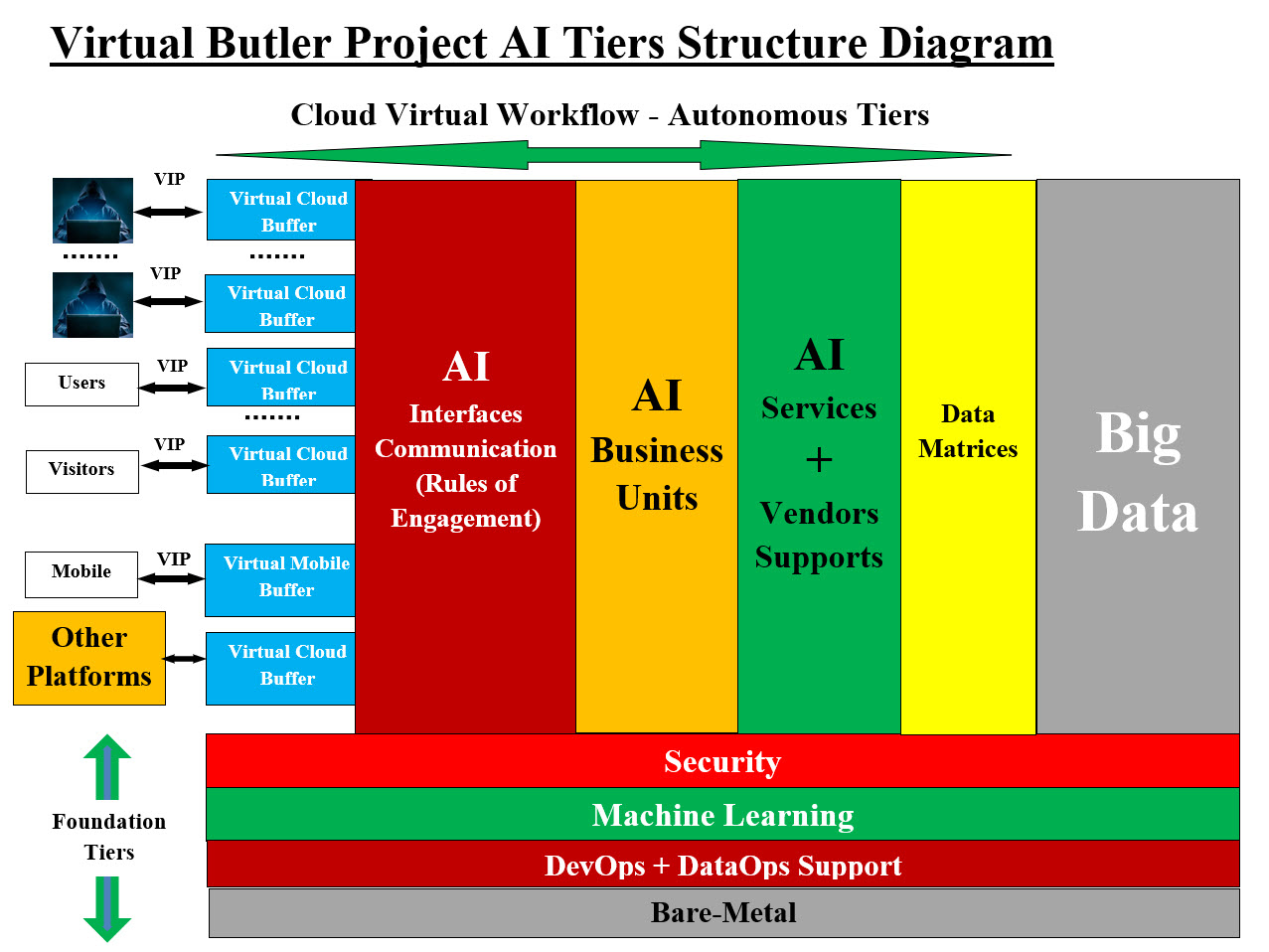
Butler Project AI Tiers Structure Diagram Image Butler Project AI Tiers Structure Diagram Image presents a rough picture of our Butler Project AI Tiers Structure. These tiers would be developed using system enterprise abstraction layers. Each tier has its unique tasks and some of these tiers may contain AI autonomous containers-components. Hackers: A hacker is an individual who uses computer, networking or other skills to overcome a technical problem. The term also may refer to anyone who uses their abilities to gain unauthorized access to systems or networks in order to commit crimes. Hacking can be performed by an individual, groups, state sponsored group or anything in between. State-sponsored attacks are carried out by cyber criminals directly linked to a nation-state. Their goals are threefold: Identify and exploit national infrastructure vulnerabilities and gather intelligence. Hacking and Cybersecurity are serious issues and there are state-sponsored hacker groups. It has been observed that countries with the most advanced technology and digitally connected infrastructure produce the best hackers. China and USA are clear examples of digitally advanced nations which both deploy tools and specialists for intelligence gathering, and for the protection of their national interests. Our Strategies: We do need strategies to handle hackers and their attacks. Therefore, we need to think in a number of terms. First, how hackers and specially internal hackers think and operate. What tools they use and how do they find vulnerabilities in their target system. We also would not be able to close all the system holes and gaps, but we can use the strategy of keep hackers guessing what to do next by keep moving their target (by dynamically created and deleted virtual servers) so any hacker attempt would have to start all over again. The question is how economically and easily can we implement these strategies plus do the training and maintaining of these implementations. The following are a list of our strategies: 1. Virtual Proxies, Virtual Servers, Virtual IP Addresses and Virtual Objects 2. The use of Machine Learning to provide guidelines of protecting the cloud services 3. Closed Box Virtual Database Services 4. Chip to Chip Communication 5. Dynamic Virtual redundancies of Virtual cloud services 6. Use of NAS as backup and rollback storage 7. Using logging, tracking and audit trial - internal hackers 8. Training employees and cloud services users on protecting against hackers 9. Brainstorm the development cost and performance of our architected solutions AI and Hackers: Artificial intelligence is transforming cybersecurity into an industrial-scale threat by supercharging attacker capabilities with autonomous code generation, rapid reconnaissance, and scalable social engineering, while simultaneously being deployed by defenders to patch long-standing zero-day vulnerabilities. Employers: Employees are a company's greatest asset, but also a major risk. Employees can be a network user, an administrator, security engineer, managers, CEO, ... etc. For example, spare-phishing is a specific and targeted attack on one or a select number of victims, while regular phishing attempts to scam masses of people. In spear phishing, scammers often use social engineering and spoofed emails to target specific individuals in an organization. Virtual IP Address (VIP): A virtual IP address (VIP or VIPA) is an IP address that doesn't correspond to an actual physical network interface. A virtual address space or address space is the set of ranges of virtual addresses that an operating system makes available to a process. VIPs includes network address translation (especially, one-to-many NAT), fault-tolerance, and mobility. Virtual Cloud (Security) Buffers: A computer buffer is a temporary memory space. A buffer helps in matching speed between two devices and between two data transmission. Our Virtual Cloud Buffer is a virtual server created as a Container. The main objective is to separate between the outside world and internal structure and services. The size of our Virtual Cloud Buffer is dynamic and flexible to handle any load. Each buffer has its own virtual IP address. Container and components would be running inside our Virtual Cloud Buffer and wiping our Virtual Cloud Buffer clean is one of its main features. Hackers and their code would not get further than our Virtual Cloud Buffer. Virtual Mobile (Security) Buffers: Virtual Mobile Buffer uses the same concept as the Virtual Cloud Buffer. It is mainly designed for Mobile accesses. Users: Our view of a user is: anything (individuals, companies, hardware, software, databases, clients-server request, B2B, B2C or other platforms) which has a request for our local or remote services. Based on the type of user, there is a number of parameters such as security, privileges, permissions, accesses, ... etc. Mobile: A server is a machine that stores data and allows others to access this data. A client is any device that you use to access a server. Therefore, this could be a laptop, a smartphone, or an internet-connected device, like a printer, or even a car. Mobile services needs a special handling than the internet, even though they both are accessing internet servers. Other Platforms: The main goal is communication between platforms. DataOps: Our DataOps Definition: DataOps is any data operations or processes which include Big Data, CRM, Analytics, Data Visualizer, Data Minding, Data Storage, Business Intelligence (BI) and Data Security. In a nutshell, DataOps is any data operation which advances and secures your business. Based on our definition, the scope of DataOps would be too vague and too broad to handle. See the following link: DataDops Reverse Engineering: Reverse Engineering is a service which would be used to aid with Cybersecurity detection. Security: Security is implemented in every tier plus the security of both physical and supporting software system. It is increasingly critical to make sure that these elderly are safe in every situation possible. Falls, burns, and poisonings are among the most common accidents involving elders. They are adults who might be living alone and they may also become the victims of criminals who target these elders. Security for elders includes personal medical alerts, simple home security systems, and environmental monitoring devices. The system security tier would be implemented in the Foundation Tier, Workflow Tier and Autonomous Tier. They would include: 1. Cybersecurity 2. Data Security 3. Privacy 4. Trusted contact 5. Caregivers - Medical Alert Systems 6. Cons artists 7. Scam detection (calls/messages) 8. Misinformation 9. Financial transactions 10. Equipment Security We have architected-designed Cybersecurity Detection and Suite: Architect: Object Oriented Cybersecurity Detection (OOCD)© Cybersecurity Suite: Object Oriented Cybersecurity Detection Architecture (OOCDA) Suite© We would be integrated some of applicable security applications. We would also integrate AI and autonomous agents. Machine Learning (ML): Machine Learning (ML) is our bread and butter when it comes to architecting-designing-developing AI system. We have Nemours documentations and webpages for the world to see and examine our ML approaches and tools. The following links are some of what we posted and our audience need to check our webpages: Machine Learning (ML)© Technical Review and Answers© AI Machine Learning Operations (MLOps)/© We would be more than happy to answers questions and concerns. DevOps: DevOps is critical to any of our architecting-designing-developing (AI system or any system). DevOps is our foundation and it is intelligent. We also architect-designed DevOps Editors for speed the processes of system development and testing. We have Nemours documentations and webpages for the world to see and examine our DevOps approaches and tools. The following links are some of what we posted and our audience need to check our webpages: Sam's DevOps Editors© DevOps© Infrastructure (DevOps and Bare-Metal) - Our Regenerative Medicine Umbrella© We would be more than happy to answers questions and concerns. BareMetal: See: Sam's Bare-Metal Server Features page: Sam's Bare-Metal Server Features© Business Units: Our AI Project Business Units tier's main job: The main job of the Business Units tier in an AI project is to align the technical AI solution with real-world business needs, domain rules, and practical value. They ensure that data science efforts solve actual operational problems rather than just building technology for its own sake. We believe that an AI Business Units Tier is the best way to structure how the project would handle the domain business needs, communication, and solve actual operational problems. What are the business units for our AI virtual butler software for elderly? The primary business units for AI virtual butler and companion software for the elderly typically have the followin business units: 1. Conversational Companionship: Conversational companionship is ongoing social and emotional engagement provided through spoken or written dialogue. It focuses on building a continuous, friendly relationship rather than completing specific work tasks. Today, this term often describes interactions with artificial intelligence systems, social chatbots, or digital avatars designed to ease loneliness. 2. Remote health and safety monitoring: Remote health and safety monitoring is the use of connected digital devices and sensors to track a person's vital signs, physical status, or environmental safety conditions from a distance. The collected data is transmitted in real time to medical professionals, researchers, or safety supervisors to manage health risks outside traditional facilities. 3. Integrated care coordination platforms: An integrated care coordination platform is a digital software system that connects health providers, social services, and patients into one shared workspace. It links data across different medical groups to help teams manage treatments, track referrals, share secure messages, and lower overall health costs without repeating tests. 4. Cognitive Support (CORE PRODUCT): A cognitive support core product is the fundamental, intangible benefit or primary service that a brain-health item provides, specifically the enhancement of mental clarity, focus, memory, or neurological maintenance rather than the physical pill or bottle itself. See Our Core Support section. 5. Task Execution & Guidance: Guidance provides the direction, rules, and support needed to complete those actions correctly. Together, they ensure that work is planned well and done right. See Our Core Support section. 6. Emotional & Social Support: Emotional and social support is the network of psychological, empathetic, and tangible resources provided by others. It helps people feel cared for, valued, and safe. This backing acts as a buffer against stress and improves overall mental and physical well-being. See Our Core Support section. 7. Health & Wellness: Health is the goal or state of being, while wellness is the dynamic action taken to achieve it. Health is a state of complete physical, mental, and social well-being, not just the absence of disease. Wellness is the active, intentional process of making choices and building habits that lead to better health and a fulfilling life. 8. Health & Medication Management: Health and medication management is a coordinated, ongoing healthcare process designed to safely oversee, track, and optimize a patient's drug therapy. The primary goal is to maximize therapeutic benefits, prevent harmful drug interactions, reduce medication errors, and ensure proper daily adherence. 9. Integrated care coordination platforms: Integrated care coordination platforms are digital software solutions that unite medical, behavioral, and social service data into a single hub. They streamline communication among distinct providers, automate care workflows, and track patient progress across different settings to improve health outcomes and reduce costs. 10. Financial & Life Management: Financial and life management is a holistic approach that connects personal money choices with your core values, major life goals, and daily habits. Instead of focusing only on investments, it blends budgeting, career planning, wellness, and personal priorities to help you build a secure and meaningful future. 11. Liability Section: A liability section typically refers to a specific part of our services for elderly, a financial balance sheet, or a legal contract that outlines debts, legal responsibilities, or boundaries of financial compensation owed to others. 12. Elderly High Liability: An "elderly high liability" profile refers to an older adult (typically age 65 or older) or a care setting involving them that carries an elevated statistical and legal risk of severe injury, medical complications, financial exploitation, or premises liability claims. 13. Engagement and Growth: Elderly engagement and growth refer to the active participation of older adults in social, community, and personal learning activities, paired with ongoing psychological, cognitive, and physical self-improvement. It emphasizes that aging is a dynamic period of life focused on purpose, connection, and continuous well-being rather than decline. See Our Core Support section. 14. Personalization Engine - System should learn: An elderly personalization engine is an intelligent software system that uses data and artificial intelligence to customize healthcare, digital interfaces, and daily living support for older adults. It adapts services to match an individual’s changing health status, physical abilities, and cognitive needs. 15. Trust & Safety Layer Elderly (users are vulnerable to scam): A Trust and Safety Layer for elderly users is a dedicated system of automated tools, proactive rules, and human support designed to protect older adults from online fraud, financial scams, identity theft, and manipulation while they use digital platforms or services. 16. Elderly Cost and Billing: An elderly cost and billing system refers to either software used by senior care facilities to manage resident charges or daily money-management services that help older adults pay personal household bills. These systems track care tiers, automate monthly statements, or prevent missed utility and medical payments. 17. Elderly Financial Support: Elderly financial support refers to monetary assistance, programs, and management strategies designed to help older adults cover basic living, housing, food, and healthcare costs when living on fixed retirement incomes. It also encompasses financial caregiving, where relatives or professionals manage a senior's money and legal assets. 18. Elderly Virtual Assistance: Elderly virtual assistance refers to remote support provided to older adults. It uses human assistants or digital tech like smart speakers to manage daily tasks, health reminders, and communication, helping seniors live independently. 19. Time Management & Structure: Elderly time management and structure refer to the intentional organization of daily activities, rest, and routines for older adults. This practice promotes emotional stability, reduces anxiety, ensures medication adherence, and preserves independence by replacing chaotic schedules with gentle, predictable rhythms. 20. Elderly Purpose & Personal Growth: Elderly purpose and personal growth refer to the ongoing psychological drive and intentional self-improvement in later life. Rather than concluding with age, purpose shifts from career-driven productivity to internal wisdom, legacy, and fulfillment, while personal growth involves continuous learning, emotional resilience, and self-discovery. 21. Business Strategy: A business strategy is a master plan that guides how a company competes in its market, uses its resources, and reaches its long-term goals. It helps a business stand out from rivals and create value for its customers. 22. Pricing Model: A pricing model is the framework or method a business uses to calculate and charge for its products or services. It defines how value translates into revenue by determining the timing, structure, and scale of what customers pay. 23. Software governance and security: Software governance and security is the framework of policies, roles, and controls used to direct and manage software operations and protect digital assets. It aligns business goals with regulatory rules, assigns clear accountability, and builds proactive security measures into every stage of the software life cycle. 24. AI Governance & Security: Artificial intelligence (AI) governance refers to the processes, standards and guardrails that help ensure that AI systems are safe and ethical. AI governance frameworks direct AI research, development and application to help ensure safety, fairness and respect for human rights. Such frameworks additionally help organizations maintain regulatory compliance and secure sensitive data with respect to AI-powered technologies. AI Governance and Security combines the systemic policies, rules, and risk frameworks used to guide ethical, legal, and responsible artificial intelligence (AI Governance) with the technical safeguards and runtime protections used to block threats, data leaks, and model tampering ([AI Security]). Together, they ensure AI operates safely, lawfully, and reliably across its entire lifecycle. 25. Process change: Update daily work routines to fit the AI: A process change for an AI-defined daily work routine shifts human effort from routine execution to high-level oversight. You delegate repetitive tasks to automated tools, focus your time on creative problem-solving, and manage AI outputs as an editor rather than a creator. Software process change is the formal, structured method of modifying how a software system or its underlying development lifecycle is updated, improved, or maintained. It ensures that adjustments to code, design, or project scope are carefully planned, tested, and approved before rollout. 26. User training: Help staff learn how to use the new system.: Elderly user training refers to specialized physical, functional, or cognitive instruction designed for older adults (typically ages 65 and older). It adapts standard exercises or tasks to match changing physical capacities, emphasizing safety, mobility, balance, and independence in daily life. 27. Feedback loop: Share user opinions with the tech team to improve the tool: A system feedback loop is a circular causal process where a system's output is circled back and used as an input for future operations. This mechanism allows a system to self-regulate, adapt, or amplify changes based on prior results. 28. System Evaluation (Evals): Helping define what "success" or a correct answer looks like for their specific departmental tasks. A software system evaluation is the formal, systematic process of assessing a software application or system to measure its quality, performance, effectiveness, and suitability for specific user or organizational requirements. It determines how well a product meets technical baselines, operational needs, and business goals. An AI software system evaluation is the systematic process of measuring an artificial intelligence model or agent's performance, safety, accuracy, and behavior against defined quality benchmarks. Unlike traditional software tests that check for fixed pass/fail code, AI evaluation handles probabilistic, open-ended outputs using automated scoring, test datasets, and human review Services: What is a service? A service is an act, work, or use provided by one party to help or benefit another. Unlike physical goods, a service is intangible, meaning you cannot touch or store it. It delivers value by solving a problem, fulfilling a need, or helping someone reach a goal. What are software services and hardware services? Both provide technology as a service. Software services are digital programs and cloud tools delivered over the internet on a subscription basis. Hardware services involve the physical installation, maintenance, repair, or rental of tangible computing equipment like servers and computers. Software Services: Programs, data storage, and computing platforms hosted on remote servers and accessed through a web browser. Software as a Service-Platform-Infrastructure (Cloud email, online document editors, customer databases, and web hosting). Hardware Services: They are the physical equipment management, support, or the actual hardware. What is an AI service? An AI service is a cloud-based application or platform that uses artificial intelligence to automate tasks, analyze data, and make decisions. It lets people and companies use machine learning and natural language processing without building costly computer systems from scratch. Services and Software Engines: Software services provide cloud-based delivery, development, and system management, while software engines act as the hidden core logic processing data or executing workflows. Together, they power modern digital systems-shifting from simple tool access to automated, AI-driven outcomes. We define services for our AI Butler project as the following structure: 1. DevOps Services 2. System Support Services 3. Software Applications Support Services 4. Business Application Services 5. Venders' Support Services System Support Services: System software is a type of computer program designed to run, manage, and control computer hardware, providing a stable platform and foundation for application programs to run on top of. Key Types of System Software are Operating Systems (OS), Device Drivers and Utility Software. There is a number system support software which we provide as follows: • Virtual Servers • Filing System • Storage Facilities (NAS) • Automation • Integrated Services • Cloneable • Reusable Components • Documented • Trackable-Audit Trail • Logging Our Regenerative Medicine Umbrella Project has a number services which we can use. See our DevOps Section which have the links for these services. Software Applications Supporting Services: Ongoing software support and maintenance services include break/fix services, bug fixing, troubleshooting, backup, ongoing guidance, and advisory, etc. Application Support Services are designed to maintain and optimize your software ecosystem, ensuring operational excellence, consistent performance, and rapid scalability in a dynamic digital environment. Software applications supporting services include Application Support, maintenance, troubleshooting, and updates designed to keep digital tools running safely and smoothly. These services help fix bugs, add new features, and train users so businesses can avoid costly downtime. We have a number of projects which we can use their Software Applications Supporting Services. Business Application Services: Business Application Services (BAS) encompass the professional strategies, software tools, and managed services used to build, integrate, test, and manage enterprise software. Business applications are programs that companies develop to perform business tasks and manage different aspects of their business operations. These applications help businesses work more effectively, make better decisions, and better serve their customers. For our AI Virtual Butler Project, the following are the business application services list: 1. Ongoing Social and Emotional Engagement Support 2. AI Interactions 3. Digital Devices and Sensors Services 4. Data Collected 5. Medical Professionals and Researchers Tracking 6. Health Management 7. Integrated Care 8. Treatments Management Servicies 9. Cognitive Support 10. Work Planning 11. Supporting Network 12. Elders' Well-Being 13. Health and Medication Management 14. Remote Health and Safety Monitoring 15. Integrated Care Coordination Platforms 16. Financial and Life Management 17. Security 18. Elderly Engagement and Growth 19. Personalization Engine 20. Billing System 21. Financial Support 22. Virtual Assistance 23. Time Management 24. Intentional Organization of Daily Activities 25. Software Governance 26. Change Control 27. Training 28. Feedback Loop AI Vendors Support: Vendors Support? Vendor support refers to the technical, operational, and administrative assistance provided by a supplier or platform to third-party businesses and contractors. It typically covers troubleshooting, contract maintenance, bug fixes, and compliance management across various communication channels. Vendor support is the help, maintenance, and technical service provided by a company (the vendor) for the products or services they sell. Key components include troubleshooting technical problems, software updates or patches, and user training. Software Vendors Support? Software vendor support is direct technical assistance, troubleshooting, and maintenance provided by the company that made the software. It typically covers bug fixes, security patches, software updates, and guidance on configuring or using specific features. What is An AI vendor? An AI vendor is a company or organization that develops, sells, licenses, or supports artificial intelligence technologies, software, hardware, or cloud-based services. These providers range from major cloud platforms offering machine learning infrastructure to niche companies building specific automation and data tools. What is AI Vendors Support? AI vendor support refers to the technical assistance, maintenance, and strategic guidance provided by a company that sells artificial intelligence software, models, or infrastructure. It includes troubleshooting system errors, optimizing machine learning models, ensuring data compliance, and helping client teams navigate deployment. Why is it called 3rd party? In commerce, a "third-party source" means a supplier (or service provider) who is not directly controlled by either the seller (first party) nor the customer/buyer (second party) in a business transaction. What does third party mean in software? Third-party software is a computer program created or developed by a different company than the one that developed the computer's operating system. For example, any software running on a Microsoft computer that was not created by Microsoft is third-party software. What is the importance of Vendors Support? Vendors Support provides access to critical security patches, technical troubleshooting, and product updates. It minimizes costly system downtime, ensures operational compliance, and connects businesses with expert insights and best practices to maximize the long-term value of their tools and services. Note: We as an AI and software team do not prefer using any vendors and we believe homegrown system are far better in the long run and cost in term of money and time. Pros and cons on vendors support services or programs: We asked Google for an answer: Vendor support services and programs offer specialized technical help and product expertise, but they also introduce recurring costs, response delays, and vendor lock-in. Weighing the advantages and disadvantages helps organizations decide whether to use internal teams or external vendor programs. Advantages of Vendor Support: • Expert knowledge: Direct access to specialized engineers who know the product architecture. • Faster bug fixes: Direct pathways to patch deployments, updates, and hotfixes. • Resource relief: Takes heavy troubleshooting weight off internal IT or admin staff. • Predictable maintenance: Structured upgrade paths and preventative system monitoring. Disadvantages of Vendor Support: • Recurring costs: Ongoing service level agreements (SLAs) or retainer fees add up. • Communication bottlenecks: Tiered support structures can slow down complex problem resolution. • High dependency: Reliance on external roadmaps for legacy patches or end-of-life timelines. • Upselling pressure: Support channels occasionally pivot toward pushing new licenses or features rather than fixing core problems. Interfaces-Communication-Rules of Engagement: What is the difference between communication and interfaces? We would like to look at nature and see if we can clarify what we mean when it comes to interfaces and communication. Let us look at the situation when two or more animals or bugs meet (interface). At such a meeting or interface, these animals or bugs would communicate with each other through or using sounds, lights, smiles, body language, or other means of communication which we may not be aware of. What is difference between interface and communication? An interface is defined a connection or exchange point between different systems, applications or devices that enables a smooth exchange of data. An interface functions like a gateway through which a communication channel opens and data or information is exchanged. We are developing Hugh intelligent automated integrated complicated system with the goal of eliminating any human interactions. Therefore, we need to define how these systems interface and communicate. The following are topics which would define the needed Interfaces and Communication: • Levels of Networking • Connections • Internet Protocol • Access and Security • Services Map-Configuring • Internal and External • Hardware, Software and Devices (physical, virtual or combo) • Data Exchange • Storage • Machine Learning (ML) • Management • Documentation Interfaces-Communication-Rules of Engagement: For Interfaces, Communication and Rules of Engagement we need to use what we did for Regenerative Medicine project. The following link is the Rules of Engagement (ROE) For Our Regenerative Medicine Umbrella: Rules of Engagement(ROE) For Our Regenerative Medicine Umbrella© Big Data, Data Matrices and Long Integer Records: We have covered these topics in some of our webpages-documentations: 1. Big Data 2. Data Matrices 3. Long Integer Records The following are the links for these pages: https://sameldin.com/ButlerTechnicalReviewAnswersFolder/TechnicalReviewAnalysisDevelopmentTwinTestingDeployment.html https://sameldin.com/VAITMINS_AnalysisArchitectFolder/VAITMINS_AnalysisArchitectPage.html Switch-Case AI Model-Agent (Our AI Virtual Receptionist Systems) Butler Project Tiers and Containers: Organizing a project into functional tiers separates responsibilities, while containerization deploys each piece reliably across different machines. We need to structure the entire system tiers into containers with the following categories: 1. Autonomous Tiers 2. Foundation Tiers 3. Workflow Tiers 4. Common 5. Utilities System tiers and project containers refer to the structural layers of software applications and the isolated runtime environments used to package and run them. 1. Autonomous Tiers: Why Autonomous is the first Tiers presented? Our main goal is automation and intelligence, therefore, presenting Autonomous Tier-Containers should be the first, so we can address each tier-container's Autonomous ranking level. We would be adding our estimate of the Autonomous level (0 – 5) next to each container. Level - 0 = No Autonomous Level - 5 - Fully Autonomous We based our Autonomous level estimates on our current search, knowledge and support. We also added notes to inform our teams and investors that would be needing the help of the fields’ experts. For example, Bare-Metal has the Autonomous Level = 3 We need help since it is not our specialty, and hardware and infrastructural knowledge and experiences are required. While DevOps + DataOps has Autonomous Level = 5 and we see that we do not a choice and they must be fully Autonomous. 2. Foundation Tiers: Our Virtual Butler Project Foundation Tiers are composed of the following:
As for the Foundation Tiers Containers, the following is our preliminary containers. Note: Most likely we would be adding more containers as we start the development:
3. Workflow Tiers: Our Virtual Butler Project Workflow Tiers are composed of the following Containers:
We need to add more Workflow containers as the project progresses. 4. Common Containers: What is a Software Commons? A software commons in a project is a pool of shared, open-source code and reusable tools that anyone can use, modify, and distribute freely. Benefits: • Shared Code • No Reinventing • Saves Time • Lowers Cost Improves Quality Examples of Software Commons are: Reusable Libraries We define Common Tiers as a collection of software programs as well as DevOps Services which would be used by almost all the other tiers. For example, Virtual Servers dynamic creation and deletion as a service for other software application to use in the dynamic creation of their needed objects and classes. Our Virtual Butler Project Common Tier are composed of the following Containers:
5. Utilities: Software utility tools in a project help maintain, optimize, and secure the systems and data required to keep development running smoothly. Our Virtual Butler Project Utilities Tiers are composed of the following Containers:
Butler Project Tiers-Containers-Components: What are software project components? Project components are the distinct, identifiable building blocks or separate activity segments that make up a whole project. Breaking a project down into these specific parts helps teams manage work, track progress, and reach goals without confusion. • Functional code blocks • Project management components • Structural elements The five fundamental components of artificial intelligence (AI) are: 1. Learning 2. Reasoning 3. Problem-solving 4. Perception 5. Language understanding How to Automating Software Project Components Development-Coding? Our Goal of Development - Automating Programming: The Development- Automating Programming is not easy task, but we are trying to automating the development of system components by using any code we can get our hands on it as we mentioned in Development Becomes Fill-in-the-Blank section inTechnical Review Answers Page. For more details see the Technical Review Answers Page - Development: - Automating Programming section: Butler Project Tiers-Containers-Components Testing Twin Architect-Design: Our Architect-Design-Testing Twin Tiers: Architect-Designing testing twin tiers that mirrors our AI system's architectural layers is our way to solve the late-cycle testing bottleneck. By creating a parallel testing architecture, we can test each layer independently and continuously. We are architecting-designing a parallel testing architecture that mirrors our AI system tiers. Essentially creating a "shadow" testing structure that operates alongside our production AI tiers. We are not following the traditional post-hoc testing. 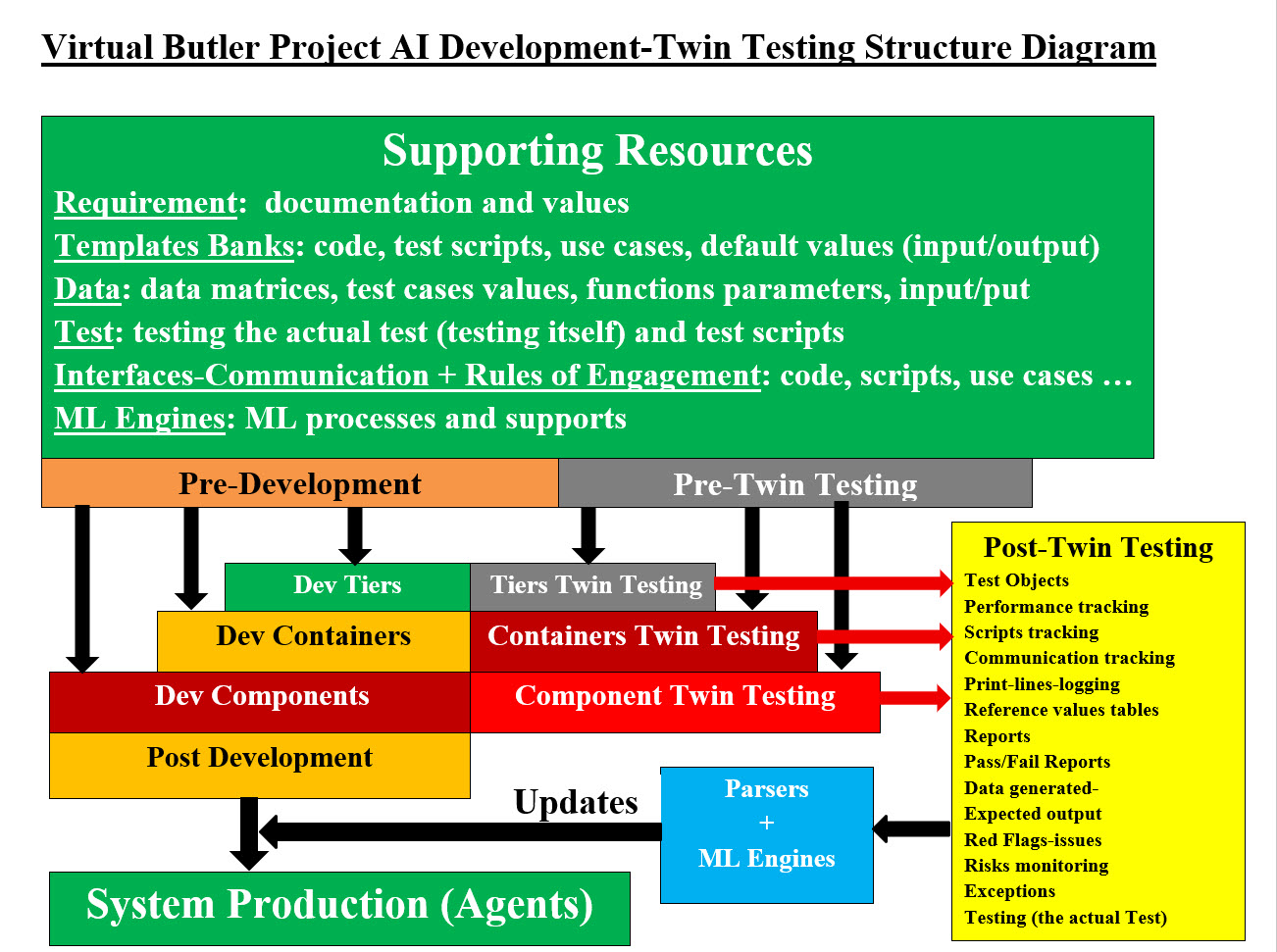
Virtual Butler Project AI Testing Tiers Structure Diagram Image Virtual Butler Project AI Testing Tiers Structure Diagram Image presents a rough picture of both the development and Twin Testing architect-design. Our Architect-Design-Testing Twin Tiers are creating a parallel twin testing architecture. We can test each layer independently and continuously. The same thing would apply to containers, components and their respective Twin Testing. Supporting Resources: Our Supporting Resources are the following: 1. Requirement: documentation and values 2. Templates Banks: code, test scripts, use cases, default values (input/output) 3. Data: data matrices, test cases values, functions parameters, input/put 4. Test: testing the actual test (testing itself) and test scripts 5. Interfaces-Communication + Rules of Engagement: code, scripts, use cases ... 6. ML Engines: ML processes and supports 7. Misc. Pre-Development: Our Supporting Resources would provide all the needed resources, processes and data for both Pre-Development and Pre-Twin Testing to start their tasks independently and continuously. Our Supporting Resources would provide all the needed resources, processes and data for the following: 1. Development Tiers and Tiers Twin Testing 2. Development Containers and Containers Twin Testing 3. Development Components and Components Twin Testing Post Development: Post Development are the actual running code before integrating the testing updates and would be used as part of recovery and rollback support. Post-Twin Testing: Post-Twin Testing would be collecting the Twin Testing files created by the testing levels. The following is the list of these files: 1. Test Objects 2. Performance tracking 3. Scripts tracking 4. Communication tracking 5. Print-lines-logging 6. Reference values tables 7. Reports 8. Pass/Fail Reports 9. Data generated 10. Expected output 11. Red Flags-issues 12. Risks monitoring 13. Exceptions 14. Testing (the actual Test) Parsers and ML Engines: Parsers and ML Engines would parsing the Post-Twin Testing files and pasting the updates to the Post Development to updates any errors or issues before System Production-Agents. System Production-Agents: These are the running systems for our project. Our approach is to use templates, code modules bank and/or any code which applies tier-container-component and at the same time the testing twin would automatically be developing the needed scripts to test the tier-container-component. Plus, the testing twin would be building matrices of: 1. Input data 2. Possible output 3. Function parameter passing Our approach shifts testing from a reactive, late-stage activity to an inherent byproduct of the architecture itself. By binding a "Testing Twin" to our architectural templates, code modules, and containers, we are effectively turning our system's blueprints into automated test generators. The goal is to automate the architecting-designing and parallel testing. Own System from Scratch: Building your own system from scratch is our strategy to maintain total control, eliminate vendor dependencies, and avoid ongoing licensing costs and delays. To achieve this without relying on standard schemas like OpenAPI or JSON Schema, our custom plat-form must treat code as data. Instead of forcing developers to write third-party configuration files, our system can extract the architecture, parameters, and types directly from our custom template code and code module banks. Personal Note: Being a one-man-show with almost zero resources, where I was the: manager-architect-analyst-developer-tester-graphic artist-admin, ... and everything between forced me to think in ways which shaped my skills for life. For example, I have to think in parallel and as I was programming-coding, I was also debugging and testing in my head. I did a lot of notes writing for both debugging and testing processes as I was coding. Another issue when programming for clients where testing was outsourced, we as a developing team had to writeup notes to the outsourced testers to make their life easier. Another testing issue is the fact the testers would be creating testing scripts for each component to test them. This is very difficult and costly processes for any project. Testers have to identified a major bottleneck where testing happens too late in the cycle and that creates a heavy technical burden for any team. Issues: • Delayed testing which would begin only after coding is finished • Big learning curve where testers would waste a lots of time reading and understanding the code • Codebases are difficult for writing test scripts • Code changing would require changes to the existing test scripts, forcing testers to rewrite them constantly • As for maintenance, the more complex codebases is the more difficult for writing test scripts Tiers Testing Strategy: We believe that testing scripts should be done with coding and automation can make such effort easier and coherent. Therefore, we need to develop the following for coding and testing automation processes: Template Banks: Create banks of templates of coding, testing script and use cases We would be using the templates banks for creating the testing scripts after the development of each component. Early Testing: At tier architect-design and development stage, testing would be easy and not done at the end of developments. Tier Integration Testing: Tier Integration Testing would be done at the end or based on the system criteria.
Architect-Design Tiers Vs Testing Tiers presents Architect-Design Tiers Vs Testing Tiers Images present the comparison between architect-design and Testing. Parallel and Sequential Development: These Testing tiers have the goal of automating the development of testing scripts and the actual testing and updating. The Templates banks would provide all the needed templates for coding, testing script and use cases. Based the resources, the development can be done in both Parallel and Sequential processes. For more details see the Technical Review Answers Page - Development: - Automating Programming section: |
|---|